
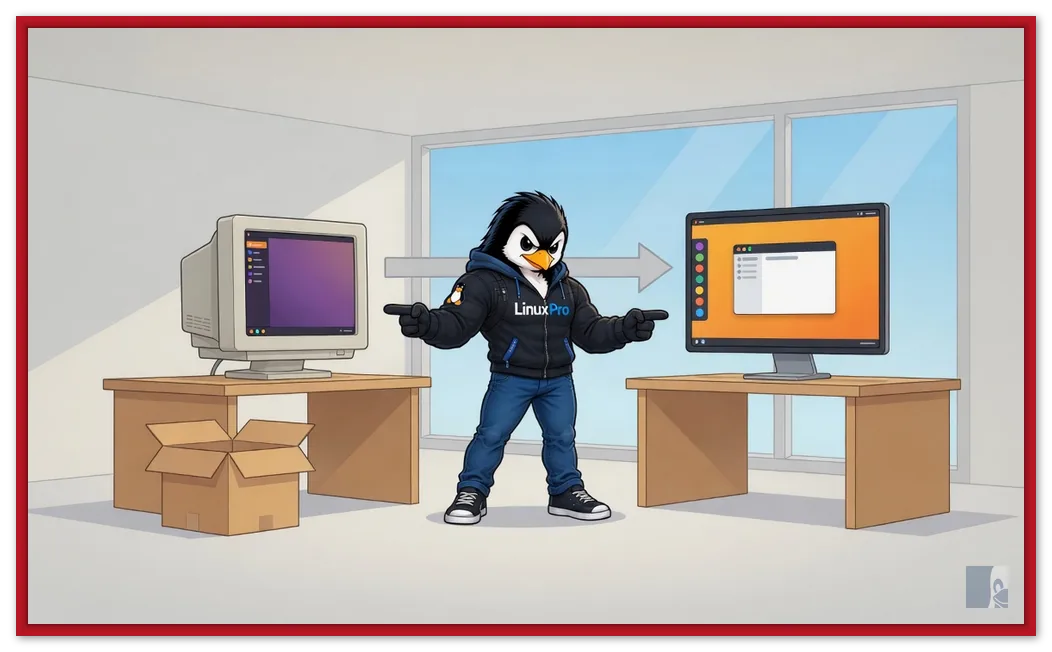
On April 5, 2017, Mark Shuttleworth, founder of Ubuntu and Canonical, published a statement ending one of the biggest bets in the distribution's history: Canonical would abandon Unity8 and the convergence strategy (the same system on desktop, tablet, and phone), returning Ubuntu's default desktop to GNOME starting with 18.04 LTS. It was the end of six years of an interface that divided the community like few others.
What Unity was, and why it existed
Unity debuted in 2010 (in Ubuntu 10.10 Netbook Edition) and became the default in 11.04. The idea was bold for its time: a single interface scaling from laptop to smartphone, with the launcher on the side, the Dash for global search, and the global menu at the top. The bigger bet came later — convergence: you would connect your phone to a monitor and it would become a PC, running the same Unity8 on Canonical's own display server, Mir. There was Ubuntu Phone, tablets, the crowdfunding campaign for Ubuntu Edge — all pointing toward that future.
The community never fully embraced Unity. For many, it represented fragmentation (another desktop, another display server outside the freedesktop standard), controversial telemetry (the infamous “Amazon lens” that searched for products in the Dash), and effort diverted from what already worked. The industry, in turn, did not embrace convergence: manufacturers preferred “the devil they knew” or their own platforms.
Shuttleworth's announcement, in his own words
In the statement, Shuttleworth was honest about the defeat. The key excerpts are worth revisiting (freely translated):
“I am letting you know that we will end our investment in Unity8, the phone and convergence shell. We will return Ubuntu's default desktop to GNOME in Ubuntu 18.04 LTS. […] I assumed that, if convergence was the future and we could deliver it as free software, this would be widely appreciated. I was wrong on both counts. In the community, our efforts were seen as fragmentation, not innovation. And the industry did not embrace the possibility.”
He emphasized that Canonical would continue investing in the Ubuntu desktop “on which millions depend” and that the decision, while personally painful, was shaped by commercial constraints: the money would go where growth was — cloud and IoT. “Most workloads in public clouds, and most private Linux cloud infrastructure, depend on Ubuntu,” he wrote, citing OpenStack, Kubernetes, MAAS, LXD, Juju, and snaps/Ubuntu Core as the axis of the company's future.
What happened next
The transition was quick and, to many people's surprise, smooth. Ubuntu 17.10 “Artful Aardvark” (October 2017) already came with GNOME Shell — but with a customized session that resembled Unity (launcher on the left, Ambiance theme), softening the shock for those coming from years of Unity. The 18.04 LTS release cemented GNOME as Ubuntu's face, as it remains today.
The rest of the bet met different fates:
- Ubuntu Phone / Ubuntu Touch — Canonical ended the project, but the community UBports took over the code and keeps Ubuntu Touch alive on some devices to this day.
- Unity7 — the old interface (the one most people used from 2011 to 2017) became community-maintained. In 2023, Ubuntu Unity became an official flavor recognized by Canonical, for those feeling nostalgic.
- Unity8 / Lomiri — it was renamed Lomiri and remains maintained by UBports.
- Mir — the display server did not die: Canonical repositioned it as a foundation for IoT displays and kiosks, now speaking the Wayland protocol instead of competing with it.
Timeline
- 2010 — Unity debuts in Ubuntu 10.10 Netbook Edition
- 2011 — Unity becomes Ubuntu's default desktop (11.04)
- 2013 — Ubuntu Edge campaign; bet on convergence and Mir
- 5/Apr/2017 — Shuttleworth announces the end of Unity8 and the return to GNOME
- Oct/2017 — Ubuntu 17.10 already ships with GNOME Shell
- 2018 — Ubuntu 18.04 LTS cements GNOME as the default
- 2017+ — UBports takes over Ubuntu Touch; Unity8 becomes Lomiri
- 2023 — Ubuntu Unity becomes an official flavor (community-maintained Unity7)
What this story left behind
Canonical's bet failed as a product but was right as a diagnosis: the company's future really was in cloud and infrastructure, not phones. Almost a decade later, Ubuntu is the most widely used Linux in public cloud servers, snaps have spread (for good and for controversy), and the convergence Canonical could not sell has become reality in other ecosystems in a different form.
For desktop users, the lesson was that community and market — not a founder's vision, however strongly held — decide which products grow and which disappear. It also proved that in free software, nothing truly dies: Unity7, Unity8, and Ubuntu Touch remain alive in the hands of those who wanted to maintain them. For the broader context of this distribution, see The history of Ian Murdock, the founder of Debian, from which Ubuntu originated.