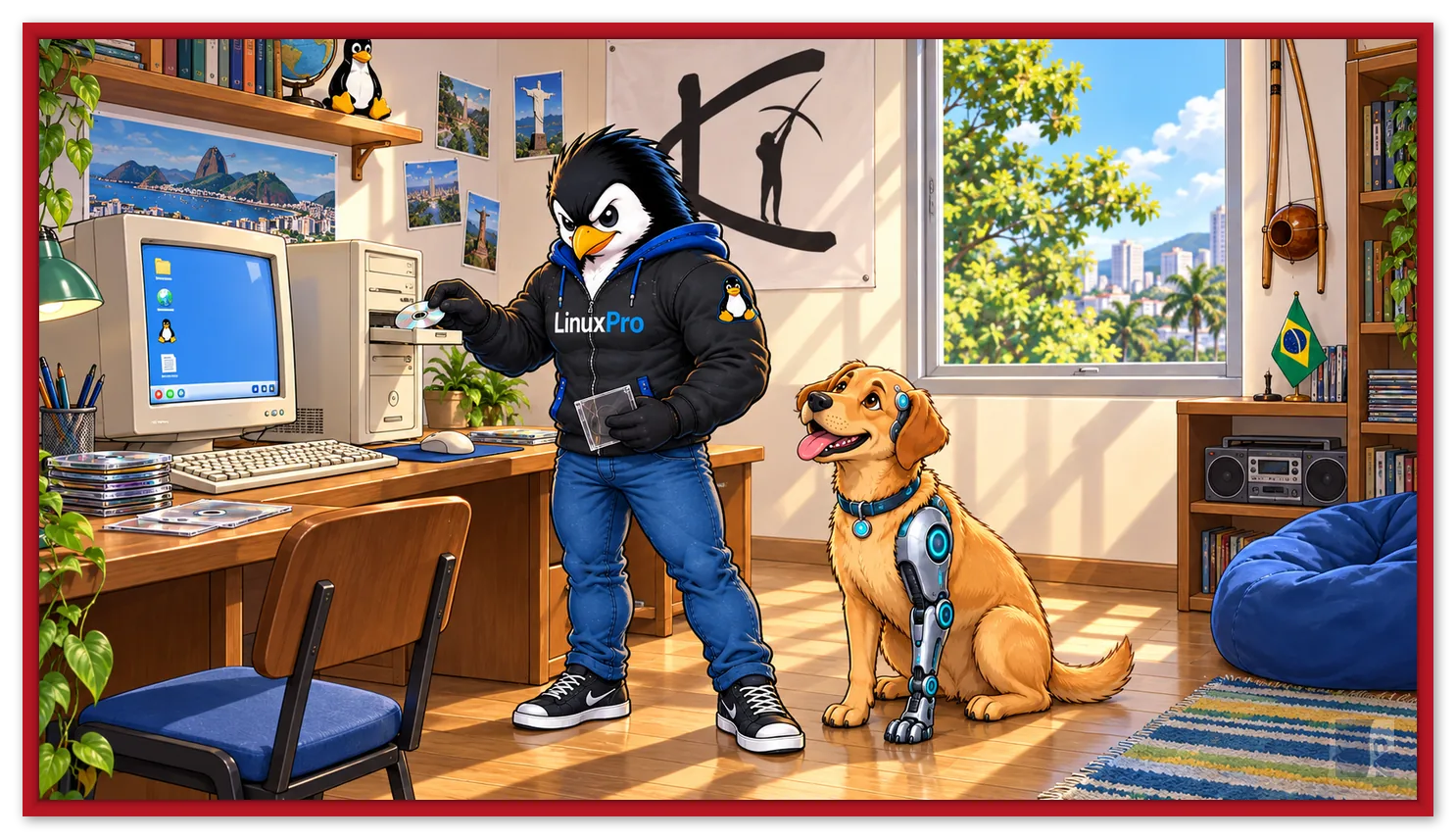
A história de Carlos Morimoto e o Kurumin Linux

The story of Carlos Morimoto and Kurumin Linux

In Brazil in the 2000s, putting Linux on the desktop still meant facing partitioning, LILO, and English-language forums. Carlos Eduardo Morimoto da Silva — the person behind Guia do Hardware — decided to do the opposite: a live CD in Portuguese, with KDE and “magic icons” that installed everything with one click, all fitting on a mini-CD … Read more

A história do XCP: o cloud aberto e o XCP-ng

The history of XCP: the open cloud and XCP-ng

XCP was the free XenServer ISO. Citrix opened up the product in 2013, and XCP died on the wiki. In 2017, the Free edition lost live storage, dynamic memory, and GPU features. Olivier Lambert of Vates launched a Kickstarter, called it XCP-ng — next generation — and on March 31, 2018, released 7.4. The … Read more

A história do XenServer: da Citrix ao nome de volta

The History of XenServer: From Citrix to Getting Its Name Back

XenServer is the product. Xen is the hypervisor. The confusion has lasted nineteen years: XenSource packages Cambridge’s work, Citrix buys it for half a billion, renames it Citrix Hypervisor, private equity restores the name, and in July 2026 XenServer 9 becomes “Citrix” again and supports every kind of workload — not just desktops. … Read more

A história do VirtualBox: o hipervisor do desktop

The history of VirtualBox: the desktop hypervisor

On January 15, 2007, a GmbH in Weinstadt, Germany, released the code of the hypervisor it used with government and banking customers. The product was called VirtualBox. Within a year, it exceeded four million downloads; in February 2008, Sun bought Innotek; in January 2010, Oracle arrived. Nineteen years … Read more

A história do Git: dez dias que mudaram o código

The history of Git: ten days that changed code

In April 2005, the Linux kernel lost its version control system. The proprietary BitKeeper had taught developers the distributed workflow — and Larry McVoy withdrew the license after Andrew Tridgell reverse-engineered the protocol. Linus Torvalds did not return to tarballs and patches. In about ten days, he wrote Git: tree snapshots, content-addressed … Read more